Introduction: The Dual Mandate of Modern Supply Chains

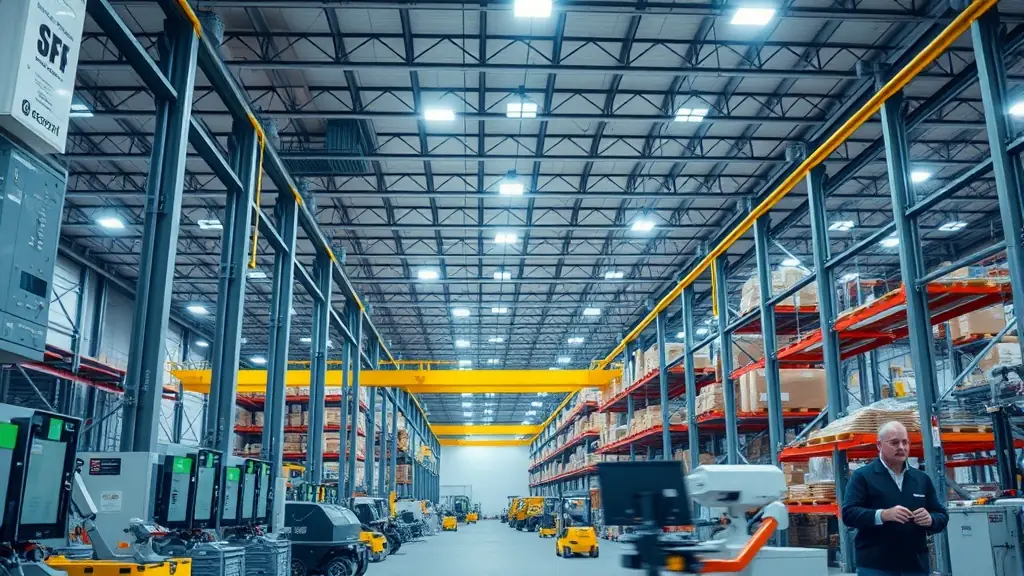
Having the right equipment supports resilient logistics operations. Investing in modern tools enhances efficiency and reduces the risk of errors and delays in the supply chain. According to Joloda International, a typical warehouse processes thousands of items each day and operates across several processing areas, receiving, storing, handling, and transporting goods quickly from storage to distribution without room for error.

As logistics demands continue to grow, organizations often focus on a dual approach: optimizing the physical core with automation and vertical infrastructure while connecting to robust external data networks for real-time visibility. This comprehensive strategy can help companies manage high-volume throughput and navigate complex regulatory compliance standards for specialized freight.

Key Takeaways

  • Warehouse Automation Equipment: Storage systems should favour vertical solutions to maximize capacity without expanding the footprint, according to Joloda International.
  • Multimodal Rail Freight: Nissin Belgium notes that allocating heavy, predictable loads to rail lines allows companies to reserve road vehicles for flexible routes.
  • Dangerous Goods Compliance: The transportation of lithium-ion batteries requires strict adherence to specialized packaging and documentation regulations under many transport frameworks.

What Are the Three Pillars of Modern Logistics?

To effectively manage modern supply chains, organizations balance internal infrastructure with external transport management. The following matrix synthesizes these critical approaches, outlining how physical hardware, software integrations, and multimodal networks interact to form a cohesive operational strategy.

Strategic Pillar Core Objective Optimal Application Main Implementation Challenge
Physical Automation Handle heavy warehouse goods consistently High-volume warehouses needing accurate inventory management Upfront capital and facility redesign
Digital Visibility Shift logistics from reactive to proactive risk management Contextual monitoring of unexpected route changes Integrating disparate data systems
Multimodal Networks Balance transit time with carbon footprint reduction Regular transport flows between fixed locations Terminal accessibility and cross-border coordination

How Do AMRs and Vertical Infrastructure Optimize the Physical Core?

Selecting the right equipment requires careful consideration of compatibility and space utilization. Storage system selection should consider space utilisation, efficient inventory management, and safety, favouring vertical solutions that maximise storage capacity without expanding the warehouse footprint, as highlighted by Joloda International.

Which Structural Storage Solutions Are Most Effective?

Operations managers must differentiate their infrastructure based on the physical profile of the goods:

  • Shelving units are best for lighter loads and smaller goods.
  • Industrial racking is suitable for larger, bulky items and is therefore an effective solution for warehouses storing large amounts of goods.

By prioritizing high-density, vertical racking, organizations can delay the need for costly facility expansions.

How Do AMRs and IoT Reduce Warehouse Downtime?

The use of robotics in warehousing and distribution centers can lead to faster processing times and reduced labor costs. According to Joloda International, Autonomous Mobile Robots (AMRs) can navigate autonomously to move heavy items without human interference, assist workers in finding stock, and deliver accurate results that boost productivity. The integration of IoT (Internet of Things) devices in these logistics tools can provide real-time data on equipment performance to help minimize downtime.

What Role Do Tail Lifts Play in Dispatch?

Physical optimization must also address the point of dispatch. Joloda International notes that a tail lift (hydraulic liftgate or tailgate lift) is a mechanical device fitted onto commercial vehicles, usually at the rear, that safely loads and unloads goods by raising or lowering a platform. This equipment streamlines the transition between warehouse loading docks and last-mile delivery locations, reducing reliance on dedicated forklift ramps at delivery sites.

How Does Real-Time Visibility Connect Supply Chains?

While internal warehouse automation creates a highly predictable environment governed by AMRs and IoT sensors, the external supply chain remains inherently volatile. Bridging the gap between a tightly controlled distribution center and unpredictable external transport networks requires robust digital visibility platforms.

Why Is Contextual Shipment Data Important?

Basic location pings fail to account for weather delays, border friction, or handling errors. As Nissin Belgium explains, tracking tells a business where a shipment is, whereas visibility provides the context needed to determine whether the shipment is progressing as expected and whether action may be required.

Automated alerts and exception management allow logistics teams to identify potential problems earlier, shifting the role of logistics from reactive to proactive risk management. Managers can intervene mid-transit to reroute goods or notify end customers.

How Does Visibility Support High-Stakes Pharmaceutical Logistics?

This contextual bridge is especially vital for sensitive cargo. For pharmaceutical shipments, Nissin Belgium indicates that logistics teams may need to monitor delays against planned milestones, unexpected route changes, missed connections or handovers, customs clearance progress, temperature conditions for sensitive shipments, and changes to expected delivery times. Synchronizing physical dispatch with this level of digital visibility supports product integrity and regulatory adherence throughout the journey.

When Does Rail Freight Make Sense in Multimodal Logistics?

Balancing transit speeds with environmental impact encourages organizations to look beyond standard road freight. Expanding into multimodal transport can create a more resilient external network, though it introduces distinct logistical hurdles.

What Are the Advantages of Rail Integration?

According to Nissin Belgium, rail freight is particularly well suited for long-distance transport across Europe, high-volume or heavy cargo, regular transport flows between fixed locations, businesses looking to reduce their carbon footprint, and shipments where delivery urgency is important but not as critical as air freight. Rail freight also offers greater transport capacity for high-volume cargo, reduced road congestion, and predictable transit schedules. By allocating heavy, predictable loads to rail lines, companies can reserve their commercial road vehicles for time-sensitive, flexible distribution routes.

What Operational Friction Exists in Rail Freight?

Despite its environmental and volume advantages, multimodal integration requires extensive coordination. Nissin Belgium points out that rail freight challenges include network availability, terminal accessibility, shipment coordination, and cross-border operations.

  • Terminal Limitations: Accessibility dictates whether rail is physically viable for a specific supply chain node.
  • Handover Synchronization: Moving freight between trains and road vehicles demands precise scheduling.
  • International Barriers: Cross-border rail operations can face differing national regulatory frameworks, requiring proactive customs and compliance oversight.

What Compliance Issues Arise in EV Battery Reverse Logistics?

The intersection of specialized physical handling and strict regulatory oversight is demonstrated in modern reverse logistics. High-growth sectors impose compliance demands that extend well past initial delivery.

How Has the EV Battery Supply Chain Expanded?

According to Nissin Belgium, EV battery logistics is no longer limited to transporting batteries from factory to vehicle manufacturer; today’s supply chains include battery cell manufacturers, module and pack assembly, distribution networks, and second-life applications. This comprehensive lifecycle requires specialized handling at every node.

How Do Companies Navigate Dangerous Goods Frameworks?

The transportation and storage of these components involve serious safety protocols. According to Nissin Belgium, lithium-ion batteries are classified as dangerous goods under many transport regulations, requiring companies to carefully manage packaging, documentation, storage, transport conditions, and trained personnel. Companies should verify the specific requirements applicable to their transport mode and jurisdiction with the relevant competent authorities, as rules vary significantly across modes and borders.

Frameworks such as the international ADR agreement (road), RID (rail), and IMDG/IATA codes (sea and air) provide baseline structures for handling hazardous materials, but the applicable regime depends on the transport mode and route in question. Companies must verify specific packaging codes, training requirements, and safety classifications with the relevant competent authorities to ensure legal compliance during transport and second-life processing.

Frequently Asked Questions (FAQ) on Modern Logistics Optimization

Q: What are the primary implementation challenges for warehouse robotics?

A: While Autonomous Mobile Robots (AMRs) can handle heavy goods and assist workers, deploying them typically requires substantial upfront capital and facility redesign to integrate their routes within high-volume environments.

Q: How does digital visibility enhance proactive risk management?

A: By providing contextual data beyond simple geographic tracking, visibility platforms enable logistics teams to use automated alerts and exception management. This allows them to intervene mid-transit during unexpected route changes or delays, rather than discovering issues upon delivery.

Q: Why are lithium-ion batteries classified as dangerous goods?

A: According to Nissin Belgium, lithium-ion batteries are classified as dangerous goods under many transport regulations, which requires companies to strictly manage packaging, documentation, storage, and transport conditions. Applicable rules vary by transport mode and jurisdiction; companies should verify their specific obligations with the relevant competent authorities.

How Can Organizations Balance Automation with Implementation Realities?

Investing in specialized logistics equipment and digital integration requires careful consideration of various factors, including cost, compatibility, and scalability. While automated systems and multimodal networks present options for operational resilience, they introduce significant implementation burdens.

How Should Companies Manage the Burden of Scalability?

Organizations must assess their specific needs before undertaking these overhauls. Upfront capital expenditures for vertical racking and AMRs can be substantial, and integrating real-time visibility software across disparate legacy systems requires technical alignment. Furthermore, ongoing maintenance and training are essential to maximize the benefits of new equipment. Developing the specialized personnel needed to manage dangerous goods compliance and rail freight coordination demands resources. By prioritizing a phased deployment approach, logistics companies can systematically build internal capabilities while mitigating the immediate financial shock of total system transformation.

Partager cet article

Facebook
Twitter
LinkedIn

Votre adresse e-mail ne sera pas publiée. Les champs obligatoires sont indiqués avec *